
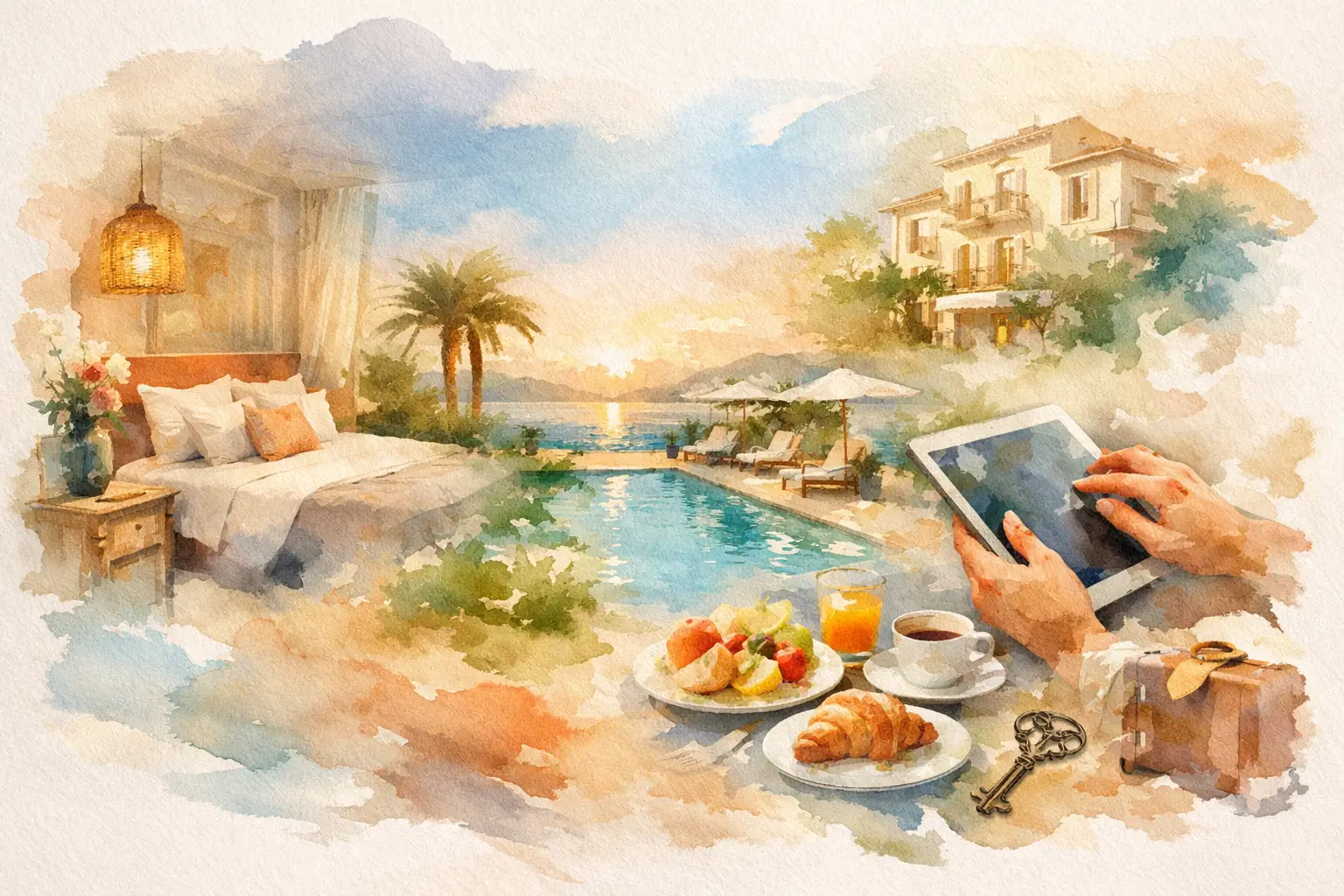
A boutique hotel can have impeccable interiors, a strong location, and genuine service – and still lose the booking before the guest ever arrives. The problem often starts online. The best boutique hotel website features do not simply make a property look polished. They reduce hesitation, communicate value fast, and move the right guest from curiosity to confirmation.
For owners and operators, that distinction matters. A boutique hotel website is not a digital brochure. It is a revenue asset. It shapes perceived rate value, supports direct booking strategy, and sets the tone for the guest experience long before check-in. When the site underperforms, the brand pays for it in lower conversion, heavier OTA dependence, and weaker pricing power.
What the best boutique hotel website features actually do
The strongest hotel websites earn attention and direct it with purpose. They make the property feel distinct within seconds, but they also answer practical questions before they become objections. That balance is where many sites fall short. They lean heavily into mood and aesthetics, then leave guests hunting for room details, policies, or the booking path.
The best-performing sites do both. They create desire and remove friction. That means every design and content choice should support one of three business outcomes: stronger brand differentiation, higher direct conversion, or better-qualified guests.
A beautiful homepage alone will not get you there. If your site is hard to navigate, vague on value, or disconnected from the booking experience, the brand promise starts to crack. For boutique hotels especially, where emotional positioning often drives rate premiums, that gap can be expensive.
1. A clear brand point of view above the fold
Boutique hotels do not win by looking generic. Your website needs to establish, immediately, what kind of stay this is and why it is worth choosing over a branded chain, a short-term rental, or the boutique property down the street.
That does not mean cramming your homepage hero with copy. It means making a sharp, strategic first impression through language, imagery, and hierarchy. The guest should understand the mood, the audience, and the promise right away. Is this a design-forward urban retreat for culture-minded travelers? A coastal property built around privacy and slow luxury? A historic inn with a social, food-led identity? If the answer is unclear, conversion slows.
Distinct positioning also protects rate integrity. Guests are more willing to book at a premium when the experience feels specific, intentional, and hard to substitute.
2. Booking access that is visible, consistent, and low-friction
This is one of the most practical best boutique hotel website features, and one of the most mishandled. If guests have to search for the booking button, click through multiple dead ends, or re-enter obvious information, you are creating drop-off.
The booking path should be visible from every key page. Navigation should make sense. Mobile users should be able to start the reservation process without pinching, zooming, or waiting for oversized visuals to load. The transition from brand site to booking engine should feel consistent enough that the guest does not wonder whether they have been pushed somewhere else entirely.
There is a trade-off here. Some boutique brands favor heavily cinematic websites with layered motion and immersive transitions. Those choices can support perception, but if they slow the path to booking, they work against the business. Experience matters. So does speed.
3. Room pages that sell the stay, not just show the room
Room inventory is where interest becomes evaluation. Yet many boutique hotel sites treat room pages like spec sheets with a few attractive photos attached. That approach leaves money on the table.
Strong room pages combine emotional framing with practical clarity. Guests want to imagine how the room feels, but they also want to know what they are getting for the rate. Size, bed configuration, occupancy, standout features, bathroom details, views, and accessibility information should all be easy to find.
What matters most is relevance. If your audience is design-conscious, they may care about materials, lighting, and layout. If your property attracts weekend couples, they may care more about privacy, soaking tubs, balconies, and late checkout options. The room page should reflect how your ideal guest evaluates value.
4. Photography that feels editorial, but still answers questions
Boutique hotels live and die by perception. Photography carries a large share of that work. But there is a difference between aspirational imagery and evasive imagery.
The best sites use photography to establish atmosphere while still helping guests make a decision. That means showing the soul of the property without hiding the practical realities. Guests should see public spaces, food and beverage moments, exterior context, and enough room variation to understand what changes across categories.
Over-styled imagery can backfire if it creates confusion. If every shot is cropped so tightly that guests cannot tell whether a room is spacious or compact, the website may inspire interest but fail to convert confidence. Strong visual direction should sharpen decision-making, not delay it.
5. Local context that supports destination demand
Many boutique hotels are not just selling a room. They are selling access to a place, a scene, or a specific rhythm of travel. Your website should help guests understand why the location adds value to the stay.
This is where many properties default to generic area copy. That is a missed opportunity. Instead of listing broad attractions everyone already knows, frame the destination through your brand lens. Highlight the nearby experiences, neighborhoods, seasonal moments, and insider behaviors that align with your guest profile.
Done well, local content increases both conversion and fit. It reassures the guest that the property belongs in its market and helps travelers self-select based on what kind of trip they want. For a hotel in a highly competitive destination, that context can be part of what justifies the rate.
Best boutique hotel website features for trust and conversion
Trust signals should not feel bolted on. They should be integrated into the site in a way that supports confidence without interrupting the brand experience.
That can include guest reviews, press mentions, awards, policy clarity, and direct-booking benefits. The key is placement. If cancellation terms, parking details, resort fees, or pet policies are difficult to find, hesitation rises. If direct-booking perks are vague, they do little to shift behavior away from OTAs.
This is one area where precision beats volume. You do not need to say everything everywhere. You do need to place the right reassurance at the right decision point.
6. Direct-booking reasons that are specific enough to matter
Many hotel websites claim it is best to book direct, then fail to make that claim persuasive. A generic banner about “best rates” is rarely enough on its own.
If you want more direct bookings, give guests a concrete reason to choose your site. That might be flexible cancellation, welcome amenities, room priority, exclusive packages, or a better arrival experience. The offer should be clear, credible, and aligned with your operating model.
There is nuance here. Not every property needs aggressive direct-booking incentives. In some cases, protecting rate parity and emphasizing service advantages is the smarter move. But if direct revenue growth is a priority, your website needs to explain the value of booking there and not somewhere else.
7. Mobile performance that respects booking behavior
A large share of discovery now happens on mobile, and a meaningful share of bookings starts there even if it finishes later on desktop. That means mobile optimization is not a technical afterthought. It is a demand-generation issue.
Pages should load quickly. Menus should stay simple. Key actions such as checking availability, calling the property, viewing room types, and getting directions should require minimal effort. Copy should remain readable without turning into walls of text, and image choices should support speed as much as mood.
For boutique brands, this often requires restraint. You can create a premium digital experience without overbuilding it. In fact, websites that feel more controlled and intentional usually perform better than sites trying to impress with every possible effect.
8. Offers and packages that fit the brand, not just fill space
Packages can help increase conversion, support shoulder periods, and raise total booking value. They can also cheapen perception if they feel random or overly promotional.
The right offer strategy depends on the property. A romantic package may work well for an adults-focused getaway brand. A culinary add-on may outperform a discount if the restaurant is part of the hotel’s appeal. The website should present these offers in a way that feels integrated with the larger story of the stay.
When offers align with positioning, they do more than move inventory. They reinforce what the brand is known for.
9. Content architecture built around decision-making
This is the feature behind all the others. The strongest hotel websites are structured around how guests actually choose. They do not force every visitor through the same path. They anticipate different priorities and make answers easy to find.
Some guests want to start with rooms. Others care first about location, dining, wellness, events, or design. Good content architecture accounts for that without clutter. It creates clear pathways, protects the brand narrative, and supports conversion at every stage.
This is where strategic brand work matters. A website cannot outperform confused positioning for long. If the property story is vague, the navigation usually becomes vague too. If the guest promise is sharp, the entire site gets easier to organize. That is one reason firms like YKMD treat branding as infrastructure rather than decoration.
A boutique hotel website does not need every trend, every feature, or every visual flourish. It needs the right system. The sites that perform best are the ones that make the brand feel desirable, the booking path feel easy, and the decision feel justified. When those three pieces work together, the website stops being a placeholder and starts doing the job it should have been built to do.