
A guest can decide whether your hotel is worth a premium rate before they ever see the lobby. They make that call in a search result, an Instagram post, a room photo, a review response, and the friction or confidence they feel at checkout. The best hotel brand touchpoints do not simply look consistent. They make the property easier to choose, easier to book, and harder to forget.
For boutique owners and operators, that distinction matters. A beautiful identity without a clear guest experience can create attention but not conversion. A polished property with a generic website can deliver a great stay while leaving direct-booking revenue on the table. Brand has to work as infrastructure – connecting the promise guests see with the experience they receive and the commercial outcomes the business needs.
Why hotel touchpoints carry pricing power
Every touchpoint either reinforces your hotel’s reason to exist or weakens it. When a property promises a design-forward urban escape but uses stock photography, generic confirmation emails, and a lobby soundtrack that could belong anywhere, guests feel the disconnect. They may not articulate it as a branding issue, but they will register it as less value.
The opposite is also true. When the story, visual system, service rituals, and booking path all point in the same direction, guests understand what makes the stay distinct. That clarity supports higher average daily rates, gives travelers a reason to book direct, and creates the kind of memory that produces referrals rather than just satisfactory reviews.
Not every touchpoint deserves the same investment. An independent hotel does not need to outspend a global flag on media or amenities. It needs to be deliberately better at the moments that shape choice, confidence, and recall.
The 10 best hotel brand touchpoints to prioritize
1. Your positioning statement
The first touchpoint is internal, but it directs every external decision. Positioning defines who the hotel is for, what need it serves, what it refuses to be, and why a guest should choose it over credible alternatives.
Avoid broad claims such as “luxury,” “authentic,” or “unforgettable” unless the operation can prove them. A sharper position might center on a restorative basecamp for design-minded hikers, a social headquarters for food-first city weekends, or a calm, elevated stay for business travelers who have outgrown the standard corporate hotel. Specificity gives creative, operations, and sales teams a common standard.
2. Search and social discovery
Discovery is where demand starts, often with only a few seconds to earn attention. Your hotel name, search appearance, social profile, photography, and short-form content should communicate a recognizable point of view before a traveler reaches the website.
This is not a call to post more for the sake of activity. A property with limited resources should prioritize a strong visual library, clear profile language, and repeatable content pillars over daily posts with no commercial purpose. Show the experiences guests cannot get from a room-type grid: the neighborhood rhythm, the signature ritual, the local access, and the atmosphere that makes a stay feel chosen rather than interchangeable.
3. The hotel website
Your website is not a digital brochure. It is a conversion environment, and its job is to make the value of booking direct immediately clear.
The best hotel websites lead with the central experience rather than burying it under property facts. They pair persuasive storytelling with practical decision-making tools: room clarity, rate confidence, useful location context, and a booking path that is visible without feeling aggressive. If the guest has to hunt for why the hotel is special, they are already comparing you on price.
4. The booking engine and rate presentation
A brand promise can lose momentum in one clumsy booking flow. Confusing fees, generic rate names, slow load times, and inconsistent photography turn an emotionally engaged traveler into a skeptical shopper.
Rate presentation deserves more strategic attention than it usually receives. Give packages and direct-booking offers names that connect to the property story, but keep the value legible. Cleverness cannot come at the expense of clarity. The guest should understand what they are buying, why it is worthwhile, and why booking on your site is the smart choice.
5. Confirmation and pre-arrival communication
The confirmation email is an underused revenue and experience touchpoint. It arrives when guests are most receptive, yet many hotels send a transactional note that could have come from any property.
Use this moment to build anticipation and reduce uncertainty. Confirm the essentials, then introduce the experience with a useful, distinct voice. A pre-arrival message can offer parking guidance, dining reservations, local recommendations, or an upgrade without feeling like a hard sell when each recommendation is relevant to the guest’s reason for travel.
6. The arrival sequence
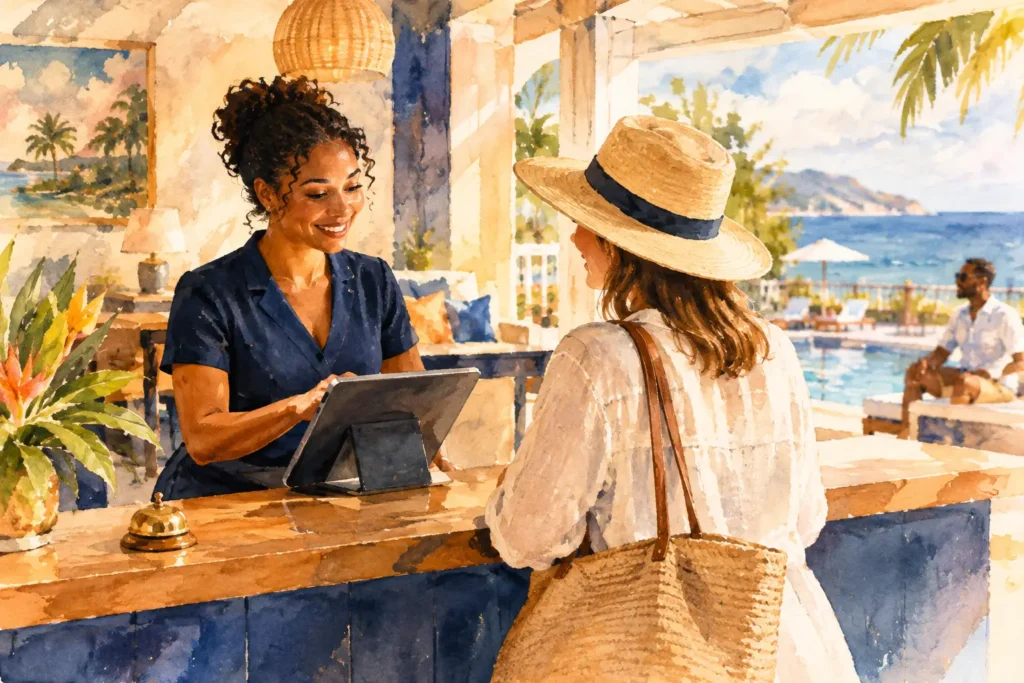
The drive in, signage, first scent, front-desk welcome, and opening line from the host form one experience. Guests do not separate them into departmental categories. They simply decide whether the hotel feels as promised.
For a boutique property, arrival should have one memorable gesture, not ten expensive ones. That may be a welcome drink with a local story, a warm and informed greeting, an effortless digital check-in, or a specific cue that signals transition from travel mode to stay mode. The right choice depends on the brand. A high-energy social hotel and a quiet wellness retreat should not greet guests in the same way.
7. The public spaces and sensory details
Lobbies, corridors, elevators, and outdoor areas are where a hotel’s brand becomes physical. These spaces should do more than photograph well. They should guide behavior, support the guest’s desired emotional state, and provide a reason to linger.
Light, scent, music, materials, uniforms, signage, and even the language on a table tent can either create cohesion or introduce noise. The goal is not themed excess. The goal is a distinctive atmosphere that feels intentional at every budget level. A modest property with a disciplined sensory point of view will often feel more premium than a larger hotel filled with disconnected design decisions.
8. The guest room
The room is where the guest tests the promise privately. Comfort is nonnegotiable, but brand expression can live in the details: the in-room guide, minibar edit, bath products, lighting controls, artwork, bedside copy, and the practical intelligence of the layout.
Do not force branding into every surface. Guests need relief from marketing. Instead, select a few moments where the property’s character adds genuine value. A carefully edited local guide is more powerful than a logo on every amenity. A sleep-focused hotel should invest in bedding, blackout control, and quiet before it spends on decorative gestures.
9. Service recovery and review responses
A service failure is a brand touchpoint with unusually high stakes. Problems happen. What guests remember is whether the team took ownership, communicated clearly, and acted with appropriate urgency.
Service standards should give staff permission to solve common issues without a long approval chain. That protects the guest experience and protects reviews. Public review responses should be specific, human, and accountable, never defensive or copy-and-paste. A thoughtful response cannot erase a poor stay, but it can show future guests how the hotel behaves when something goes wrong.
10. Departure and the return invitation
Checkout is not the end of the relationship. It is the handoff to retention, reputation, and future direct revenue. The strongest departure touchpoints leave guests with a clear final impression and a credible reason to return.
That may mean a personal farewell, a post-stay note that reflects their visit, or a future offer shaped around real travel behavior. Avoid sending the same discount to every guest. A weekend leisure traveler, a meeting attendee, and a local dining guest should not receive identical follow-up. Segmentation makes the communication more useful and the brand more intelligent.
Turn touchpoints into a revenue-driving system
The fastest way to improve hotel brand touchpoints is not to launch a dozen disconnected upgrades. Start by mapping the actual guest journey from first discovery through post-stay follow-up. Identify where the hotel makes a promise, where it delivers proof, and where friction interrupts the path to booking or loyalty.
Then choose the moments with the greatest commercial leverage. A property with weak direct booking conversion may need a website and booking-engine overhaul before it invests in lobby décor. A newly acquired hotel with inconsistent reviews may need service standards and recovery protocols before it expands its social media calendar. The right priority is determined by the gap between the current experience and the revenue goal.
At YKMD, this is the work behind a premium brand system: aligning story, guest experience, and performance marketing so each one strengthens the others. The result is not branding for branding’s sake. It is a hotel guests recognize, trust, and choose at a rate that supports the asset.
Treat every guest interaction as a decision point. When the promise is clear and the proof is consistent, the hotel stops competing as another available room and starts building demand as a destination.