A hotel can open with beautiful rooms, a polished lobby, and a full operations team – then still spend its first quarter chasing demand it should have created months earlier. The top hotel pre opening marketing tactics are not a last-minute launch checklist. They are the commercial infrastructure that gives a new or repositioned property the right guests, the right rate story, and a direct path to booking from day one.
For boutique hotel owners and operators, pre-opening is the rare moment when every decision can reinforce the same promise. The name, visual identity, amenities, reservation flow, opening offer, and first guest experience either build pricing power together or compete for attention. Marketing works best when it is built into the property’s business model, not added after construction photos are ready.
Start With a Positioning That Can Carry a Rate
Before paid media, social content, or a PR pitch, answer the harder question: why should a guest choose this property over the credible alternatives already available? “Boutique,” “luxury,” and “design-forward” are categories, not positions. They do not tell a traveler what they will feel, who the stay is for, or why the experience is worth the rate.
A strong positioning platform defines the property’s most valuable audience, its emotional and functional promise, and the evidence guests will encounter on-site. A coastal inn may be designed for restorative long weekends rather than generic beach travel. An urban hotel may win by making access to a specific neighborhood feel insider-led and effortless. The distinction matters because it informs imagery, packages, media targeting, copy, partnerships, and price.
This is where owners should resist the temptation to market to everyone. Broad reach can look impressive in a launch report while producing weak conversion and rate-sensitive demand. A more focused proposition gives the hotel a sharper story and makes its first marketing dollars work harder.
Build the Booking Engine Before the Buzz
Awareness without a conversion path is expensive applause. Your website, booking engine, rate structure, and lead capture system should be ready before the first serious press mention or influencer post lands.
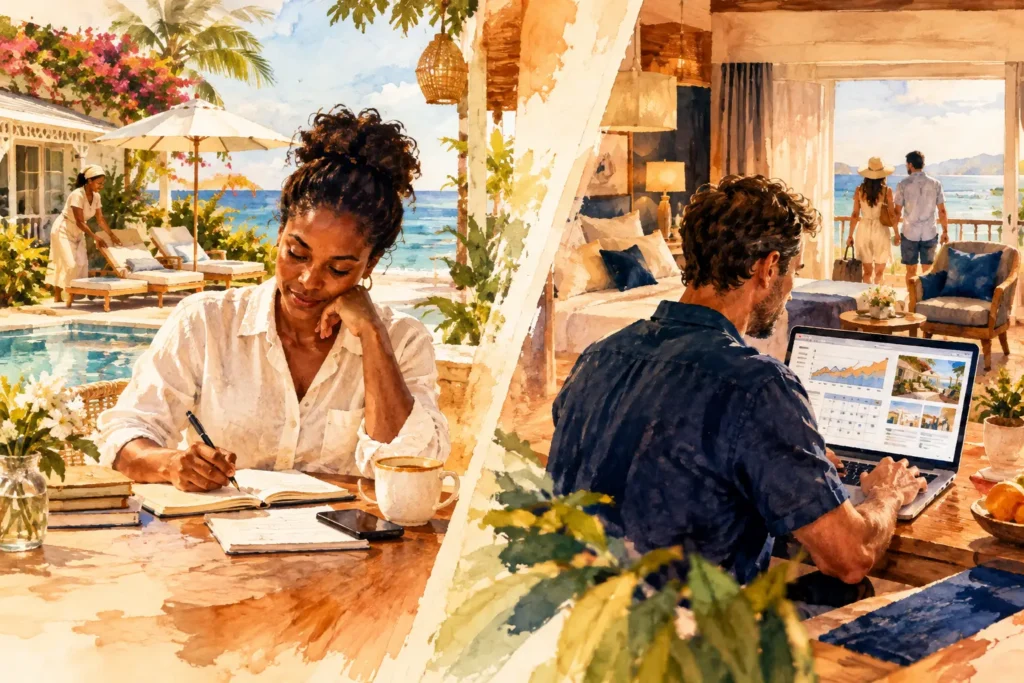
The property website needs to answer the questions travelers actually use to decide: What is this place? Why now? What makes the rooms, location, food, or programming different? What does a stay feel like? Most importantly, how do I book directly with confidence? Renderings and mood boards can support the story early, but they cannot carry it alone. Show tangible proof wherever possible: neighborhood context, design details, founder perspective, room features, local rituals, and clear opening timing.
Set up measurement from the beginning. Track direct booking conversion, booking-engine abandonment, email signups, source of leads, package uptake, and rate performance by channel. If the hotel cannot see where early demand is coming from, it cannot make intelligent decisions about where to increase spend or what to stop funding.
Make Rate Strategy Part of the Launch Story
An opening offer should create urgency without teaching the market to wait for discounts. Deep, blanket discounts often fill early rooms at the cost of long-term rate integrity. They also attract guests who may not value the experience the hotel is trying to build.
Instead, offer added value that supports the brand: a dining credit, a private local experience, flexible arrival benefits, a curated welcome, or priority access to an opening event. The right offer depends on the hotel’s operating reality. A property with a strong food and beverage program may benefit from an inclusive credit, while a limited-service hotel may need to lead with a compelling local partnership. The goal is to make direct booking feel more rewarding, not simply cheaper.
Create a Founding Audience, Not Just a Follower Count
The most valuable pre-opening audience is not the largest one. It is the group most likely to book, advocate, return, and influence others who fit the hotel’s target profile. Build a founding audience through a clear invitation: early access to opening dates, first access to limited packages, invitations to preview events, or a behind-the-scenes view of how the property is taking shape.
Email is particularly powerful here because it creates an owned relationship before third-party channels become the default. A simple “opening soon” form is rarely enough. Give prospective guests a reason to identify themselves, such as selecting their preferred travel occasion, desired stay dates, or interest in dining, wellness, or local experiences. That information makes later campaigns more relevant and more profitable.
Social content should do the same job, not become a stream of construction updates. Use the pre-opening period to reveal the hotel’s perspective. Introduce the people shaping the experience, the local makers involved, the rituals guests can expect, and the point of view behind the design. The best content does not merely announce that a hotel exists. It makes the right traveler imagine themselves there.
Turn Local Partnerships Into Demand Channels
A hotel does not open into an empty market. It opens within an ecosystem of businesses, institutions, venues, creators, and community voices that already influence guest behavior. Strategic partnerships can create early credibility faster than broad advertising, especially for independent properties without the distribution advantage of a global flag.
Prioritize partners whose audiences overlap with your target guest and whose role strengthens the stay. That may include a respected restaurant, gallery, wellness provider, cultural institution, wedding planner, local retailer, or event producer. A useful partnership has a clear exchange of value – not just a logo swap or a one-time social post.
For example, a hotel targeting design-minded weekend travelers could collaborate with local studios on a limited itinerary, preview reception, or in-room retail moment. The partner gains exposure and sales opportunity; the hotel gains a differentiated reason to visit. Build these relationships early enough that they can shape the experience itself, rather than becoming promotional decoration after the fact.
Use PR and Creators for Proof, Not Vanity
Press and creator activity can accelerate a launch, but only when the story is specific. “New boutique hotel opens downtown” is rarely enough to earn meaningful attention. What is culturally relevant, operationally distinct, or newly useful about the property? Is it restoring a significant building, creating a hospitality anchor in an overlooked district, introducing a food concept with real local authority, or serving a travel audience that the market has ignored?
Create a media narrative with substance, then match it to the right outlets and creators. A small group of well-aligned regional writers, travel editors, and niche creators can outperform a costly guest list selected only for follower counts. Evaluate fit by audience geography, engagement quality, visual style, and the likelihood that their followers can actually book.
Timing also matters. Invite trusted media and creators when there is enough of the experience to photograph, taste, and judge. If access happens too early, they may only have renderings and hard-hat footage. Too late, and the opening moment has already passed. In some cases, a soft-opening stay produces better storytelling than a formal launch party because it gives guests room to experience the hotel as intended.
Design the First 90 Days as a Revenue Campaign
Opening day is not the finish line. It is the start of a high-stakes learning period. The first 90 days should operate as a coordinated campaign that combines guest feedback, content capture, reputation management, and weekly performance decisions.
Make review generation part of the guest journey, but do not force it. Teams should be trained to recognize delighted guests, resolve friction before checkout, and invite feedback at the right moment. Early reviews have outsized influence because travelers know a new hotel has little historical proof. Operational misses will happen in any opening period; the difference is whether the team responds with speed, ownership, and care.
Continue testing offers, audience segments, and creative messages after opening. If a package drives occupancy but erodes average daily rate, it may need refinement. If paid search produces strong direct bookings for a particular travel occasion, expand that theme across email and social. If the hotel’s most compelling story is its restaurant rather than its rooms, use the restaurant as a demand driver while protecting the hotel’s broader brand promise.
Align Teams Around the Same Promise
Pre-opening marketing fails when the campaign promises one experience and the property delivers another. Sales, operations, reservations, food and beverage, and guest services need a shared understanding of who the hotel is for and what moments matter most. A front desk greeting, a pre-arrival email, a room amenity, and a late-night dining recommendation all either validate or weaken the story guests were sold.
That alignment is why brand work should function as infrastructure. At YKMD, the aim is not creative for creative’s sake. It is a premium brand system that connects story, guest experience, and performance marketing so early attention turns into direct revenue and long-term equity.
The most successful hotel launches do not try to manufacture excitement on opening week. They build conviction earlier, give the right guests a reason to act, and deliver an experience worthy of the promise. That is how a new property enters the market with more than occupancy – it enters with momentum.