
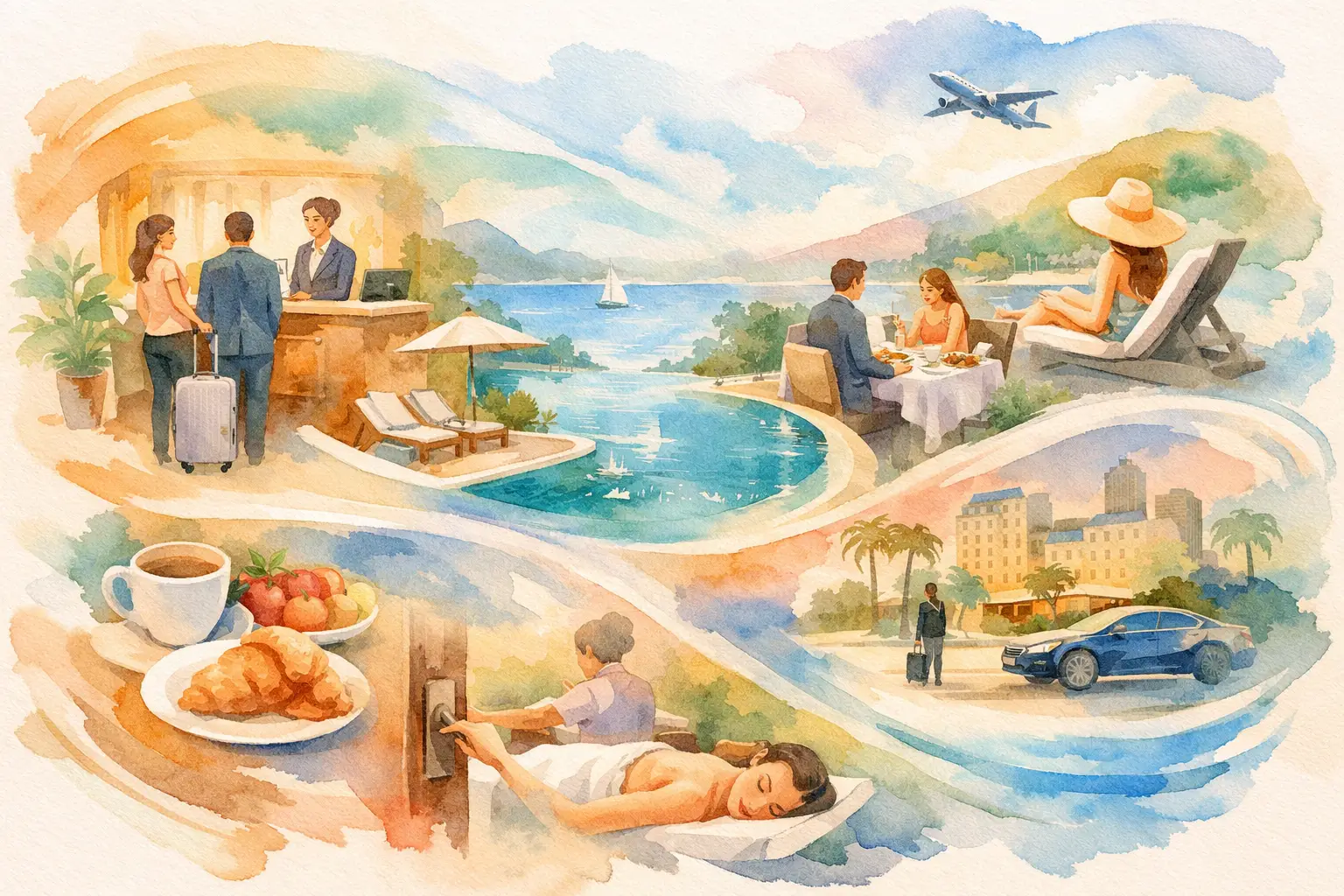
A guest lands on your website, likes what they see, checks your rates, hesitates, opens three more tabs, and books somewhere else. That loss rarely comes down to one bad photo or one high price. More often, it is the result of a broken journey. Hotel guest journey mapping gives operators a way to see that journey clearly, fix the friction, and build an experience that converts before arrival and pays off long after checkout.
For boutique hotels in particular, this matters fast. You are not just selling a room. You are selling a feeling, a point of view, and a reason to choose you over a branded chain with deeper pockets and wider distribution. If your positioning says one thing, your booking flow says another, and your on-property experience delivers something else entirely, the market notices. So do your margins.
What hotel guest journey mapping actually means
At its core, hotel guest journey mapping is the process of documenting every meaningful interaction a guest has with your brand, from first awareness to post-stay advocacy. It connects marketing, operations, service design, and brand strategy into one view of how demand becomes revenue.
That sounds simple, but many hotels treat these moments as separate departments instead of one continuous experience. Marketing handles discovery. Revenue management handles pricing. Front desk handles check-in. Guest services handles the stay. Then leadership wonders why direct bookings lag, reviews are mixed, and repeat business is softer than expected.
Journey mapping forces a more useful question: what is the guest trying to feel, know, and do at each stage, and what is the brand making easy or difficult?
This is where the exercise becomes commercially valuable. A journey map is not a mood board. It is an operating tool. Done well, it reveals where your brand promise is strengthening conversion and where it is quietly leaking it.
Why boutique hotels have more to gain
Independent and boutique properties live or die by perception, differentiation, and consistency. They do not have the luxury of being generic. When the experience is coherent, they can command stronger rates, improve direct booking share, and create the kind of emotional loyalty that OTAs cannot own.
But there is a trade-off. A distinctive concept raises expectations. If your hotel presents itself as intimate, elevated, and thoughtfully curated, guests will notice every touchpoint that feels generic, confusing, or transactional. A templated booking engine, vague pre-arrival emails, inconsistent service language, or an underwhelming departure process can flatten the very premium you are trying to build.
That is why journey mapping is especially powerful during a launch, acquisition, or repositioning. It helps owners and operators shape the guest experience as brand infrastructure, not as a collection of isolated fixes.
The stages that matter most
Most hotel guest journey mapping frameworks include awareness, consideration, booking, pre-arrival, arrival, stay, departure, and post-stay. Those labels are useful, but the real value comes from understanding what is happening beneath each one.
In awareness, the guest is deciding whether your property is even relevant. They may find you through search, social content, PR, local recommendations, or OTA listings. At this point, the job is not to say everything. It is to communicate a sharp position. Who is this hotel for? Why does it feel different? Why is it worth the rate?
In consideration, guests compare. This is where weak messaging gets expensive. If your site does not quickly answer practical questions about location, room types, amenities, parking, dining, and experience, the guest leaves to gather that information elsewhere. And once they leave, they start building confidence in another option.
Booking is where desire either becomes commitment or drops off. This stage is often treated as technical rather than strategic, which is a mistake. Every field, fee, policy, and bit of uncertainty affects conversion. A beautiful brand can still lose if the path to purchase feels clunky or risky.
Pre-arrival is one of the most underused revenue moments in hospitality. This is where anticipation builds, questions surface, and add-on offers can feel either thoughtful or pushy. The difference comes down to timing and relevance. A generic upsell email feels like admin. A well-crafted message that helps guests plan transportation, dining, special occasions, or local experiences feels like service.
Arrival and check-in shape the emotional tone of the stay. Guests are not evaluating your process in a vacuum. They are measuring whether reality matches the promise they bought. If your brand communicates calm sophistication and your arrival experience feels rushed and uncertain, that mismatch lands hard.
During the stay, the journey becomes operational. Housekeeping, food and beverage, concierge guidance, maintenance response, spa interactions, and in-room communication all contribute to whether the guest feels taken care of or merely processed. Not every property needs high-touch service, but every property needs internal clarity about what its version of hospitality actually is.
Departure and post-stay often receive the least creative energy, even though they have direct impact on reviews, repeat booking, and referral behavior. A forgettable checkout closes the loop with no momentum. A thoughtful follow-up can extend the relationship and turn satisfaction into advocacy.
How to build a journey map that is useful
Start with one core audience, not every possible guest type. A leisure couple booking a weekend escape behaves differently from a wedding guest or corporate traveler. If you map for everyone at once, the result gets vague fast.
Next, document the journey from the guest’s point of view, not the org chart’s. What prompted the search? What information did they need? What concerns did they have? What emotional state were they in? A couple planning an anniversary trip is not just looking for availability. They are looking for confidence that the experience will feel worth the occasion.
Then layer your actual touchpoints onto that journey. Include paid media, organic discovery, your website, booking engine, emails, SMS, front desk scripts, signage, room materials, service interactions, and post-stay communication. This is where many teams spot the problem immediately: the brand story is strong in marketing but disappears in operations.
After that, identify friction and opportunity. Friction includes slow mobile load times, confusing room descriptions, unclear cancellation policies, impersonal check-in, or inconsistent service language. Opportunity includes pre-arrival personalization, better upsell sequencing, local storytelling, stronger arrival rituals, and post-stay offers that bring guests back direct.
The last step is prioritization. Not every issue deserves equal attention. Fix the moments that influence conversion, rate confidence, and memory first. Sometimes that means improving the booking flow before redesigning in-room collateral. Sometimes it means retraining check-in staff before investing in another campaign.
Where hotels usually get it wrong
The most common mistake is assuming the guest journey starts at booking. It starts much earlier, often with fragmented impressions across channels you do not fully control. If your hotel looks premium on Instagram but unconvincing in search results or OTA copy, the journey is already unstable.
Another mistake is focusing only on pain points. Removing friction matters, but strong brands also design for emotional lift. Guests remember the useful text before arrival, the welcome that felt personal, the room detail that showed care, and the recommendation that made the trip better. Efficiency keeps the journey intact. Meaning makes it valuable.
There is also a tendency to over-map and under-execute. Teams create complex diagrams, hold a workshop, and move on. The map should lead to decisions: which messages change, which systems improve, which service standards tighten, and which moments deserve investment because they support pricing power and loyalty.
Hotel guest journey mapping as a revenue system
The strongest reason to invest in hotel guest journey mapping is not that it creates prettier service design. It is that it aligns demand generation with delivery. When your positioning, digital experience, and on-property experience reinforce each other, guests convert with more confidence and leave with a stronger story to tell.
That story affects direct bookings, review quality, repeat stays, and rate resilience. It also gives operators a better way to evaluate marketing performance. If a campaign drives traffic but the consideration and booking stages are weak, the issue is not always top-of-funnel volume. If guests arrive excited but leave underwhelmed, the issue is not always acquisition. Journey mapping creates the visibility to diagnose the real bottleneck.
For owners launching a new boutique hotel or repositioning an underperforming one, this is where brand strategy becomes practical. Firms like YKMD build this kind of alignment as infrastructure, connecting story, experience design, and marketing into one system built to perform.
The hotels that win are not always the loudest or the newest. They are the ones that make every stage of the guest experience feel intentional, convincing, and worth paying for. If your property is trying to grow without that clarity, the next improvement is probably not another campaign. It is a better map.