A boutique hotel can have the right zip code, a beautiful renovation, and strong intent – and still underperform. Usually, the problem is not effort. It is misalignment. The most important boutique hospitality trends right now are not just aesthetic shifts or guest preferences in isolation. They are market signals pointing to a bigger reality: guests are choosing brands that feel clear, specific, and worth paying for.
For owners, operators, and investors, that changes the assignment. The goal is no longer to simply open a stylish property and market the room count. The goal is to build a brand ecosystem that supports pricing power, drives direct demand, and makes the experience memorable enough to earn repeat stays, referrals, and stronger margins.
Why boutique hospitality trends matter now
Boutique hospitality has always competed on character. What has changed is how quickly guests evaluate that character and how little patience they have for brands that feel generic. They are comparing your property against independent hotels, short-term rentals, branded lifestyle chains, and local experiences all at once.
That means trends are not just cultural observations. They affect revenue. A trend that changes booking behavior can influence channel mix. A trend that shapes guest expectations can alter review performance. A trend that raises the perceived value of your experience can support higher ADR without relying on discounting.
The smartest operators are not chasing every signal. They are identifying which shifts actually strengthen positioning and operational performance.
1. Experience design is replacing amenity stacking
For years, many properties tried to compete by adding more: better minibars, upgraded bath products, rooftop lounges, local snacks, and a few Instagram-friendly corners. Those things still help, but they are no longer enough on their own.
The stronger move is experience design. That means building a stay that feels intentional from pre-arrival through post-checkout. The confirmation email sounds like the brand. The arrival sequence sets a tone. The room details reinforce the story. The food and beverage concept belongs to the property rather than feeling rented in. Guests leave with a distinct memory, not just a list of amenities.
This is where many underleveraged hotels miss margin. They invest in physical upgrades without shaping how the experience is felt, remembered, and talked about. Experience design is what turns a nice hotel into a branded destination.
2. Locality is becoming sharper, not broader
Guests still want a sense of place, but the old formula of “locally inspired” everything has lost force. Generic references to regional culture do not create differentiation anymore. The next wave is sharper. Guests respond to properties that express a specific point of view about their location.
That could mean a hotel anchored in a neighborhood’s creative history, a property built around a particular culinary lens, or a concept that reflects the architecture and social energy of a very specific district. The key is precision. Broad storytelling reads like marketing. Precise storytelling feels real.
There is a trade-off here. A more defined brand may appeal to a narrower guest profile. But for boutique properties, that is often an advantage. Broad appeal tends to weaken pricing power. Clear identity attracts the right guest faster and gives them a stronger reason to book direct.
3. Direct booking strategy is now part of brand strategy
One of the most commercially important boutique hospitality trends is the collapse of the wall between branding and distribution. Owners can no longer afford to treat direct bookings as a marketing afterthought.
Guests decide quickly whether a property feels trustworthy, premium, and distinct enough to book without a third-party intermediary. If the brand presentation is fragmented, the website is weak, or the messaging sounds interchangeable, OTAs will continue to capture demand and margin.
A stronger direct booking strategy starts earlier than most teams think. It begins with positioning. If you cannot explain in a few seconds why this hotel exists, who it is for, and why the stay is worth the rate, your paid media, email, and website conversion will all work harder than they should.
This is why brand infrastructure matters. The story, visual system, booking path, and on-property experience all need to support the same promise. When they do, direct channels perform better because the decision feels easier.
4. Premium guests want specificity, not luxury cliches
Luxury language has become cheap. Words like curated, elevated, and bespoke are now everywhere, often attached to experiences that feel standard. Boutique properties chasing higher nightly rates need sharper messaging and stronger proof.
Today’s premium guest is not asking whether a property is upscale. They are asking what makes it distinct, what kind of stay it delivers, and whether that experience justifies the price. Design alone does not answer that question. Neither does a long list of room features.
What does work is specificity. A hotel that is adults-focused and ritual-driven. A desert retreat centered on slow mornings and dark-sky programming. A city property built for cultural travelers who want immediate access to galleries, chef-driven dining, and late-night energy. Distinction creates value. Vague luxury language weakens it.
5. Smaller footprints are forcing sharper operational choices
Many boutique hotels operate with lean teams, tighter square footage, and less room for inefficiency than larger brands. That is pushing a new kind of discipline. Owners are becoming more selective about where service should feel high-touch and where systems should reduce friction.
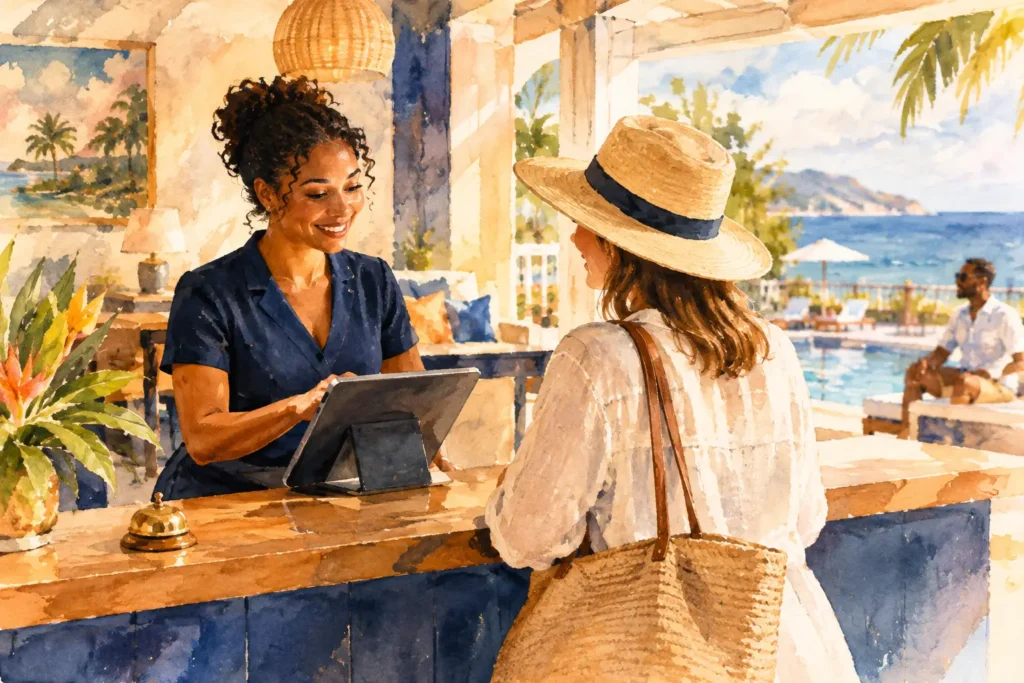
Guests do not necessarily need a traditional front desk interaction if mobile check-in is smooth and the arrival still feels personal. They may not need daily housekeeping if expectations are clearly set and the brand frames the choice well. But there are limits. If cost-cutting shows up as confusion, delay, or reduced care, the brand takes the hit.
The trend here is not automation for its own sake. It is operational editing. The strongest boutique properties are deciding where human attention matters most, then building systems around those moments. That approach protects experience quality while keeping labor models realistic.
6. Food, beverage, and programming are becoming demand drivers
For many boutique hotels, rooms are no longer the whole product. The most competitive properties are using food and beverage, wellness, events, and cultural programming to shape perception and attract both travelers and locals.
This matters for more than atmosphere. It expands revenue streams, increases social relevance, and gives the property more reasons to stay visible between booking cycles. A hotel with a strong signature restaurant, recurring event series, or meaningful partnerships can generate demand that extends beyond overnight guests.
That said, not every property should become a programming machine. The wrong activation calendar can feel forced and strain the team. The right approach is to choose experiences that reinforce the brand and fit the market. One excellent recurring concept will usually outperform a packed schedule of forgettable ones.
7. Guest data is finally becoming useful at the property level
The next edge in boutique hospitality is not just collecting guest data. It is using it in a way that improves relevance without making the experience feel transactional.
Independent properties often sit on valuable signals: booking patterns, room preferences, length-of-stay behavior, package performance, email engagement, and on-property spend. When that information is organized properly, it can improve everything from pre-arrival communication to offer strategy and repeat guest retention.
The caution is obvious. More data does not automatically mean better marketing. If every follow-up feels automated or every personalization effort feels intrusive, the effect backfires. The opportunity is to be more timely and more useful. A well-timed offer tied to a guest’s actual behavior will outperform a generic campaign every time.
8. Repositioning is outperforming surface-level refreshes
A final trend worth watching is the growing gap between cosmetic updates and real repositioning. Many owners are buying tired assets or trying to revive underperforming properties with a design refresh and a new photo shoot. Sometimes that helps. Often it does not go far enough.
If the market does not understand what the property is, who it serves, or why it deserves attention, a visual upgrade will not fix the core issue. Repositioning means revisiting the fundamentals: market role, audience, experience promise, pricing logic, digital presence, and demand generation system.
This is the work that creates durable value. It is also where firms like YKMD bring an advantage, because brand decisions are tied to conversion, rate strategy, and long-term equity rather than surface-level aesthetics.
What owners should prioritize next
The most valuable response to boutique hospitality trends is not to copy what appears popular. It is to pressure-test your property against what guests actually reward. Are you easy to understand? Is the experience distinct enough to justify your rate? Does your brand support direct demand, or does it depend on third-party visibility to stay alive?
If those answers are shaky, start there before adding new campaigns or amenities. Tighten the positioning. Clarify the story. Build an experience that feels consistent from first impression to final touchpoint. Then make sure your marketing system reflects that same logic.
Boutique hospitality still has one of the strongest opportunities in the market: it can feel personal, memorable, and high-value in ways larger brands often cannot. But that advantage only works when the brand is built with intention. The properties winning right now are not just following trends. They are turning them into sharper decisions, stronger demand, and stays people actually want to talk about.