
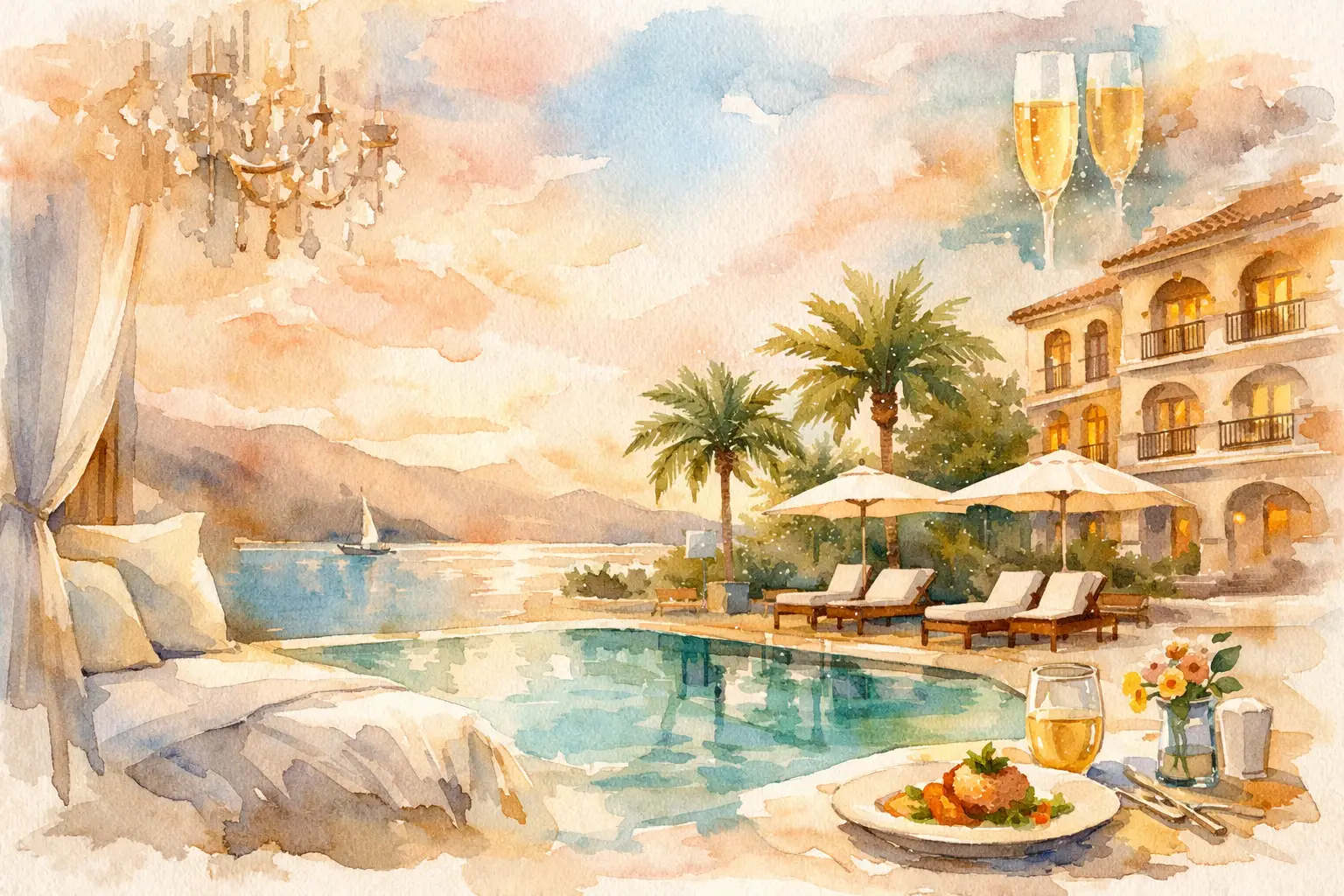
A guest can feel the gap between a hotel that has a logo and a hotel that has a brand system within minutes of arrival. The lobby music is off. The welcome feels scripted. The room copy could belong anywhere. Independent hotel brand standards close that gap by turning a property’s promise into a consistent, recognizable, bookable experience.
For an owner launching, acquiring, or repositioning a boutique hotel, standards are not corporate red tape. They are the operating language that protects differentiation when the front desk is busy, a new team member starts, a vendor changes, or the property scales. Done well, they create the confidence guests need to book direct, pay a premium, and tell someone else about the stay.
What Independent Hotel Brand Standards Actually Do
Brand standards are the practical rules that make a hotel feel like itself across every guest touchpoint. They define more than typography, color, and photography. They guide how the hotel speaks, what it prioritizes, how service is delivered, which details are nonnegotiable, and where the experience has room to be personal.
A strong standard answers questions operators face every day: What does a pre-arrival email sound like? How should a guest be welcomed after a delayed flight? Which amenities support the property’s position, and which are merely familiar? What does an issue-resolution moment look like when the brand promises calm, discovery, indulgence, or local connection?
That level of clarity has commercial value. When a brand promise is consistently delivered, the hotel can compete on perceived value rather than room size, discounting, or location alone. It gives revenue management a stronger case for rate integrity. It gives marketing real proof to communicate. And it gives the team a shared definition of what a great stay looks like.
The Standards That Matter Most
The best independent hotel brand standards do not try to document every possible decision. They focus the team on the moments that shape guest perception and purchasing behavior.
Positioning comes before polish
Every standard should begin with a sharp positioning statement: who the hotel is for, what it makes possible, and why it is more compelling than the alternatives nearby. A property cannot build meaningful standards around generic language such as “elevated comfort” or “exceptional service.” Those phrases set no useful direction for design, staffing, programming, or marketing.
A hotel positioned as a restorative coastal escape, for example, may establish standards around slower arrival rituals, quiet sensory cues, room layouts that support lingering, and local experiences that feel considered rather than over-scheduled. A design-forward urban stay may prioritize frictionless arrival, cultural access, bold editorial voice, and high-utility public spaces. Both can be premium. Their standards should not look or sound alike.
The guest journey needs defined signature moments
Guests do not experience a brand as a slide deck. They experience it in a sequence: discovery, booking, pre-arrival, check-in, room entry, on-property interactions, departure, and post-stay communication.
Standards should identify the high-stakes moments in that sequence and define the intended feeling and action for each. At discovery, that might mean editorial photography that shows a specific point of view rather than interchangeable interiors. During booking, it may mean plain-language room descriptions that reduce uncertainty and make direct booking feel worth it. At arrival, it may be a service ritual that feels warm without becoming performative.
The goal is not to choreograph staff into sounding robotic. The goal is to give them a clear emotional destination. Guests remember how a hotel handled the moment, not whether every employee used the same phrase.
Visual standards must survive real operations
A refined identity loses value if it appears one way on the website, another way in a guest email, and a third way on printed collateral. Visual standards should cover the essential working tools: logo use, typography, color hierarchy, image direction, templates, signage principles, social assets, and partnerships.
For independent properties, photography direction is often one of the highest-return standards. It should define the atmosphere, subjects, lighting, styling, and level of local context the brand requires. A collection of attractive room photos is not enough. The visual system must help a traveler picture the version of themselves that belongs at the property.
Still, standards need to be usable. If a front-office manager cannot create a branded event notice without calling a designer, the system is too fragile. Build a premium core, then provide practical templates that protect it.
Voice standards create recognition before arrival
Voice is a conversion tool. A clear verbal system makes the booking journey easier to trust and makes the property more memorable in a crowded market.
Define the brand’s personality in operational terms, not vague adjectives. If the voice is confident, specify how that appears in room descriptions, service recovery, social captions, and local recommendations. If it is playful, define the line between charm and forced cleverness. If it is highly local, establish how the team shares neighborhood knowledge without turning every guest interaction into a tourism brochure.
This is especially relevant for independent hotels because the personality of the property is often its largest strategic advantage. Major chains can win on recognition and loyalty programs. Independents win when their perspective is distinct enough to create preference.
Where Standards Meet Revenue
Brand standards are often treated as a cost of opening. That is the wrong frame. They are infrastructure for pricing power and demand generation.
When the experience, messaging, and visuals align, guests encounter fewer reasons to hesitate. They understand what makes a room worth its rate. They see consistency between what was promised online and what awaits on property. They are more likely to book direct when the website gives them clarity, confidence, and a reason to choose the hotel rather than a listing site.
The impact can also show up in review quality. A guest may not mention “brand consistency,” but they will describe a place as thoughtful, personal, easy, distinctive, or worth returning to. Those are not soft outcomes. They influence conversion on future bookings and strengthen the hotel’s ability to protect its rate during competitive periods.
That said, not every standard should be rigid. A luxury property with a highly personalized service model needs more discretion than a limited-service urban hotel with a fast, efficient guest journey. The right level of detail depends on staffing, operating model, rate position, and the complexity of the promise. Standards should create consistency of intent, not eliminate judgment.
How to Build Standards Without Creating a Binder Nobody Uses
Start by auditing the property as a guest would. Review the website, booking flow, confirmation emails, arrival sequence, public areas, rooms, service language, departure, and review responses. Look for disconnects between the intended position and the actual experience. The most damaging gaps are usually small: confusing wayfinding, stock imagery, generic welcome copy, an amenity that contradicts the stated point of view, or a team that has never been told what makes the hotel different.
Next, identify the few brand decisions that need to be protected at all costs. These may include the property’s service posture, visual point of view, room experience, local partnerships, culinary philosophy, or signature rituals. Document the principle behind each choice so teams can make smart decisions when circumstances change.
Then turn the system into working tools. A useful standards package includes decision rules, examples of what good looks like, editable templates, onboarding guidance, and ownership assignments. Marketing should not own the whole system alone. Operations, revenue, sales, and guest experience each need a role because every department either delivers the brand or makes a promise on its behalf.
Finally, review the standards against performance. Are direct booking conversion rates improving? Are guests responding to the experience the hotel intended to create? Are teams able to execute without constant exceptions? If not, the answer may be sharper training, better tools, or a more realistic standard. Brand infrastructure should evolve with the business, not sit untouched after opening day.
The Standard Is Not Sameness
The strongest independent hotels are not memorable because every detail is controlled. They are memorable because every detail appears to belong. A guest sees the same point of view in the reservation email, the bedside reading, the bartender’s recommendation, and the departure note.
That is the real opportunity: build standards that give your team enough direction to deliver the brand brilliantly, and enough freedom to make each stay feel human. When the experience is that clear, demand has something real to respond to.