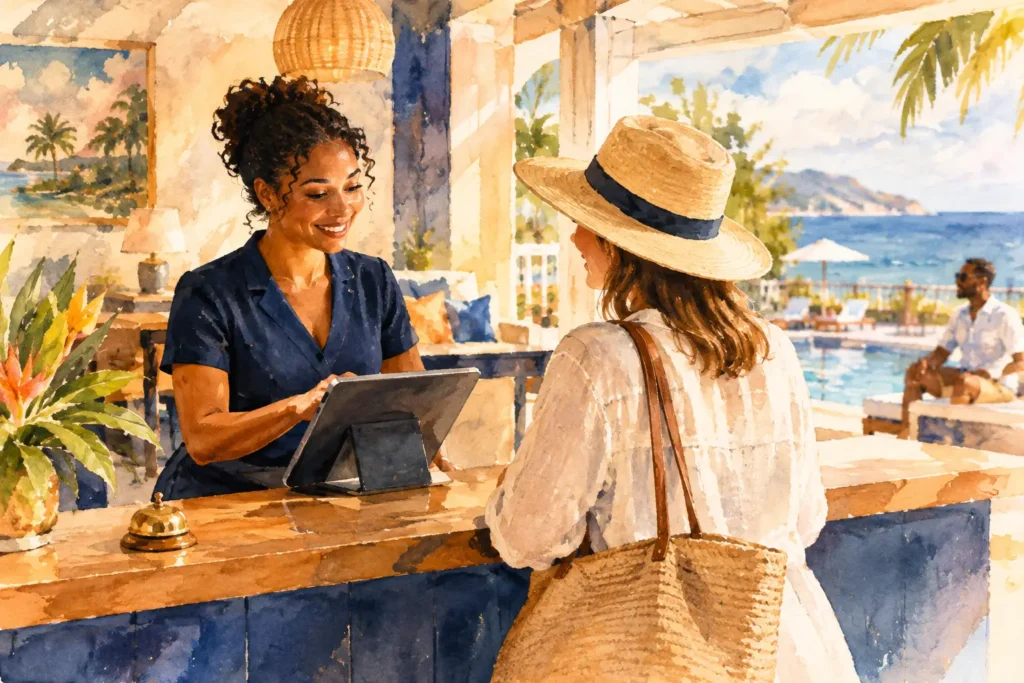

A Thursday in October can be worth far more than 18 separate room reservations. For the right independent property, hotel buyouts turn a hard-to-fill date into one decision, one contract, and a group that uses rooms, gathering spaces, food and beverage, and local partners at once.
That does not mean every boutique hotel should chase retreats, weddings, or corporate offsites. A buyout can be operationally demanding, and a poorly priced one can displace stronger transient business. But for a 10-to-100-key hotel or micro resort, it can be one of the cleanest ways to build shoulder-season demand without training the market to wait for a discount.
The opportunity is not simply selling every room. It is selling exclusivity with a clear point of view.
What hotel buyouts really sell
A full-property buyout is not a larger group block. The buyer is paying to control the atmosphere. They want their people to take over the place without sharing the pool, lobby, firepit, beach access, or breakfast room with strangers.
That matters because the buyer is usually organizing something with social stakes. It may be a founder retreat, a leadership team gathering, a wedding weekend, a creative workshop, a milestone birthday, or an incentive trip. The organizer wants guests to feel cared for, and they want fewer moving parts to manage.
Your property has to make that outcome believable before it can command a premium. Beautiful rooms help, but they are not enough. The website, photography, room mix, group inquiry process, and every piece of sales language need to answer a simple question: why should this group have the whole place to itself?
A generic inn with a generic buyout page gets compared on room rate. A property with a defined setting, useful shared moments, and a clear hosting experience gets evaluated on fit.
Start with the dates you need to protect
The biggest mistake owners make is offering hotel buyouts at the same rate and terms year-round. A Saturday in peak season and a Tuesday in September are not the same inventory problem. Treating them the same leaves money on the table in one period and makes the offer too hard to sell in another.
Begin with your demand calendar. Identify dates where transient demand already performs, dates that need help, and periods where a multi-night group would create real value. For many small coastal properties and destination resorts, the strongest buyout opportunity sits in midweek and shoulder season, when an organizer has more leverage and the hotel has more to gain.
Then set guardrails. You may require a two- or three-night minimum. You may close buyouts during a few peak holiday windows. You may offer a different minimum for a partial buyout, where a group takes a defined room wing and shared-use windows instead of exclusive access to the entire property.
This is revenue strategy, not a blanket promotion. The goal is to use buyouts to smooth demand, not replace profitable individual bookings with a deal that looks busy but underperforms on the P&L.
Price the total opportunity, not just the rooms
A buyout minimum should account for more than the published room rate multiplied by key count. You are giving up the ability to sell rooms individually, potentially turning away late-booking guests, and dedicating staff attention to one group. The rate needs to reflect that control.
At the same time, do not inflate a quiet-period buyout so far above the market that planners never inquire. The answer is often a structured offer: an accommodation minimum, a required number of nights, and optional or required experience components where they make sense for the property.
Keep the package simple. A planner should quickly understand what is included, what is available to add, and what requires a separate quote. Confusion slows decisions and creates extra back-and-forth for a lean team.
Dynamic pricing still matters. PriceLabs is a YKMD affiliate partner that can help owners set demand-aware rates and see where a buyout offer fits within the wider calendar. The tool does not replace judgment. It gives you a better starting point than copying last year’s rates or matching the hotel down the road.
Build an offer that feels designed, not assembled
Groups do not need a 12-page menu of possibilities. They need a credible picture of what happens when they arrive. That picture should be specific to your property.
A mountain lodge may lead with private trail access, a long-table dinner setting, and a lounge that becomes a workshop room. A Caribbean micro resort may lead with a private beachfront base, welcome drinks at sunset, and a schedule that leaves space for the group to be together without feeling programmed every hour. An urban boutique hotel may win on walkability, rooftop access, and an intimate home base for a team in town for meetings.
The common thread is not amenities. It is a shared experience that could not happen the same way at a large flagged hotel.
Your brand needs to carry that promise. If the property looks polished online but the group inquiry path is vague, planners will hesitate. If your photos show empty rooms but never show the rhythm of people gathering, eating, working, or celebrating, buyers have to imagine too much. They usually move on to a venue that makes the decision easier.
Show the room types, yes. Also show the moments that justify exclusivity: the courtyard at breakfast, the private dinner setup, the pool after a meeting, the outdoor lounge at night. This is where story-driven brands get results. The creative work gives the sales team proof that the experience is worth the minimum.
Make the inquiry path fast and qualified
A buyout lead should not land in the same inbox workflow as a one-night leisure inquiry. The organizer has deadlines, stakeholders, and questions that affect whether the event can happen at all.
Your inquiry form should collect arrival and departure dates, guest count, room needs, event type, budget range if appropriate, and the spaces or experiences they expect to use. Ask enough to qualify the lead, but do not turn the form into homework. The purpose is to prepare a useful response, not make someone prove they deserve one.
Speed matters after the form is submitted. A fast acknowledgment tells the planner their event is in capable hands. A thoughtful follow-up should confirm availability, explain the buyout structure, and give a clear next step. It should not send a generic brochure and ask, “How can we help?”
For properties with meaningful group demand, SuperNest is a YKMD affiliate partner built for group booking workflows. It can reduce the friction between a group commitment and individual guests reserving their assigned rooms. That is especially useful when the organizer is not paying for every room directly and needs a clean way to manage pickup.
Hostaway, also a YKMD affiliate partner, can support direct booking and property management workflows for operators who need their booking path and inventory to work together. Whatever system you use, test the guest journey yourself. A premium buyout lead can be lost by a clunky confirmation flow just as easily as by weak photography.
Market buyouts where planners are already looking
Do not expect a buyout page to generate demand by existing. It is a conversion asset, not a marketing plan.
Start with the audiences that fit your property best. If you are strong for leadership retreats, speak directly to founders, executive assistants, team offsite planners, and agency producers. If weddings are the better fit, create content around the full weekend experience, not just the ceremony backdrop. If you appeal to wellness or creative groups, show how the property supports focused time and relaxed time in the same stay.
Email is often underused here. Past guests who loved the property may know someone planning a reunion, retreat, or celebration. Local and regional partners may have clients looking for a venue. A short, well-timed campaign can put the offer in front of people who already understand the setting.
GoHighLevel is a YKMD affiliate partner for marketing automation and guest communication. It can help build a follow-up sequence for planners who inquire but are not ready to commit, while keeping messaging personal enough for a high-consideration sale.
Paid media can work, but only after the offer and landing page are clear. Sending traffic to a homepage and hoping planners find the right information is wasted spend. Track inquiry volume, qualified leads, conversion rate, booking window, direct revenue, and cost per acquisition. A buyout campaign earns its keep when those numbers improve, not when the ads get compliments.
Protect the guest experience after the contract is signed
A buyout sold as exclusive has to feel exclusive. This sounds obvious, yet many properties create avoidable friction by leaving key expectations undefined. Who has access to which spaces? What are the quiet hours? Can outside vendors enter the property? How are meals, activities, transportation, and individual room assignments handled? What happens if the group count changes?
Put the answers in plain language before the group arrives. The contract handles formal terms. The pre-arrival communication handles confidence. Both matter.
There is also a brand decision here. Not every request should be accepted. A group whose schedule, noise level, or expectations conflict with the experience you sell to everyone else can cost more than it brings in. Saying no to a poor-fit buyout protects reviews, staff bandwidth, and the positioning you are trying to build.
The right hotel buyout is not a one-off windfall. It is a repeatable revenue channel built around a property people want to gather in. If your offer is unclear, your calendar is uneven, or your brand is not carrying the rate you need, book a Deep Dive call with YKMD. It is a strategy conversation focused on what your property needs to do next, not a sales pitch.